
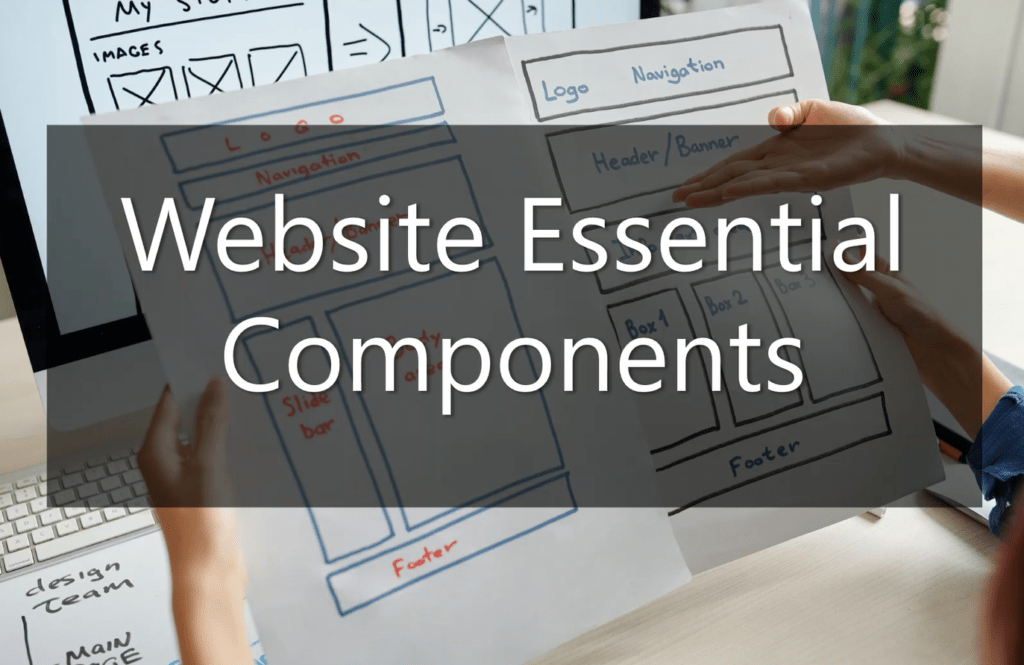
A successful service website needs a clear offer, evidence, useful details and a working contact path.
Define essential components by the visitor's task
A successful service website needs a clear offer, evidence, useful details and a working contact path. The precise sections depend on the business; a course website and a repair company should not inherit the same content merely because they use the same theme. Review every component by asking what question it answers and whether it helps the visitor reach the next decision.
Overview
Thanks to website builder services and template/CMS systems like WordPress, creating your own website is simple and quick.
However, like with any DIY project, planning of time will make your new site work and appear better.
That includes knowing and including the most essential characteristics of a good website, such as features that help users locate your site, explore it, connect with you, and more.
1. Trustworthy Web Hosting Service
Consider your web host to be a landlord who lets you rent space for a real store. They offer and manage the server space where your website’s files “live” and users can browse and explore your site. Whether you choose a basic cloud hosting plan, or an enterprise dedicated hosting plan, a dependable web host will provide speedy service, continuing maintenance and enhancements, and strong customer care and support, just like a good landlord. If you choose a host that has a website builder (like HostGator!), you can put your site’s framework together in just a few minutes.
2. Content Management System (CMS)
Your content management system works in the background to help you organize and maintain components of your website like site pages and meta data, as well as make it easier for users to navigate your site.
If you enjoy coding, you can make your own. You can also use WordPress, the most widely used content management system. To assist modify WordPress sites, there are thousands of templates, themes, and plugins available.
It can take some time to figure out how all of those pieces fit together. A website builder will incorporate its own content management system as part of its all-in-one service to get a site up and operating faster, especially if it’s your first site.
3. SEO Fundamentals
It is critical to optimize your website so that it appears in search engines. To be found among the millions of websites competing for a space on the first page of search results, you’ll need to follow a few search engine optimization (SEO) best practices.
Determine which keywords visitors are using (or will use) to reach your site — the more particular and local, the better, especially if your site caters to a local or regional audience. Make good use of those keywords in your site’s copy, meta data, media tags, and file names. A good website design and Digital Marketing Agency can help you achieve these goals.
4. Analytical Software
You’ll want to know how people find your site, which pages they spend the most time on, and how well different parts of it convert. Google Analytics is the most widely used and simple-to-use tool; it is free and works well with WordPress and several website builder tools.
5. Inventory Control
When selling things on your website, it’s important to keep track of what you have in stock, what’s sold, and what’s on backorder.
This is where inventory management software may help. You and your customers will both know whether an item is accessible to buy once they’re integrated with your checkout process and shopping sites.
6. Theme & Template for Mobile Devices
Your website must appear amazing on all types of displays, including laptops, desktops, tablets, and, most importantly, smartphones. Choose a mobile-optimized or responsive design so that your site loads quickly, is easy to read, and navigates easily on mobile devices, which are how most web visitors currently search.
Because Google looks for mobile-friendly sites, having one will assist your SEO.
7. Sections Expected by Visitors
Have you ever gone to a new website that didn’t feel quite right, or an online store that didn’t feel quiet, right?
The site was likely missing several features you’ve come to anticipate, such as a home page that explains what the site is for, a about us section that demonstrates that there are real people behind the site and contact information so readers or customers can contact you with queries or feedback.
8. The media
It’s a rare website that can grow an audience solely through words. Visuals catch our attention naturally, especially if they move and make noise, and images are essential if you’re selling items online. In your about us section, people will also want to see a photo of you.
Choose images that are optimized to appear beautiful and load quickly, and tag and label your website’s images with SEO keywords in mind.
10. Payment and Shopping Cart Tools
If your site includes a store, you’ll need a dependable, user-friendly shopping cart as well as a popular payment gateway like PayPal or Square. Most e-commerce platforms are compatible with WordPress, and many website builders can assist you in quickly setting up shopping and checkout features.
Turn the business goal into a clear website brief
Start by naming the action a useful visitor should complete. A service company might need an accurate quotation request, while a training provider needs people to find the correct course and understand its prerequisites. These are different journeys even if both organizations ask for a modern website. Write down the audience, the questions that delay their decision and the information the team needs to respond. This short brief is more useful than choosing a visual style before the problem is understood.
Build the sitemap around those decisions. Separate services when they have different buyers, deliverables or buying questions. Keep closely related information together when splitting it would force readers to jump between thin pages. Agree who supplies photography, approves copy and owns each integration. A project schedule should include these dependencies, because a finished layout cannot compensate for missing product information or an unanswered policy question.
A practical acceptance checklist makes the brief testable. Ask whether a first-time mobile visitor can identify the service, confirm that it is relevant, find supporting evidence and complete the next step. Check the enquiry from submission through to the person responsible for replying. Record anything that requires training or ongoing maintenance before approving launch.
For guidance tailored to your business, explore our Custom Website Design or request an audit.
Want advice specific to your website?
We can review the current experience, search visibility and conversion path, then prioritize improvements by likely impact.
Request a website audit